Open shelves can enhance the aesthetic of any space, adding both functionality and style. To achieve a beautiful, uncluttered look, it’s important to curate items thoughtfully and balance personal touches with visual simplicity. This approach allows for an inviting environment that showcases individuality without overwhelming the eye.
Incorporating a limited color palette or theme can significantly help in styling open shelves. By choosing items that complement each other, one can create a cohesive display that feels intentional rather than chaotic. It’s also beneficial to intersperse decorative items with functional pieces, ensuring that the shelves remain practical.
Regularly reassessing the items displayed will maintain the freshness of the shelves. Seasonal swaps or occasional rearranging can invite new life into the space, keeping it visually engaging without adding clutter. The right balance turns open shelves into a striking focal point in any room.
Fundamentals Of Styling Open Shelves Without Clutter
Effective shelf styling combines aesthetics with functionality. By carefully selecting and arranging decorative items, choosing the right shelving unit, and evaluating what to display, one can achieve a balanced and clutter-free look.
Balancing Decorative Items And Functionality
When styling open shelves, balancing decorative items with functional objects is essential. It helps to select a few standout pieces that reflect personal style while ensuring necessary items are accessible.
Tips for Balance:
- Use varying heights for visual interest; place taller items behind shorter ones.
- Group items in odd numbers for a more natural arrangement.
- Consider color consistency to create a cohesive look without overcrowding.
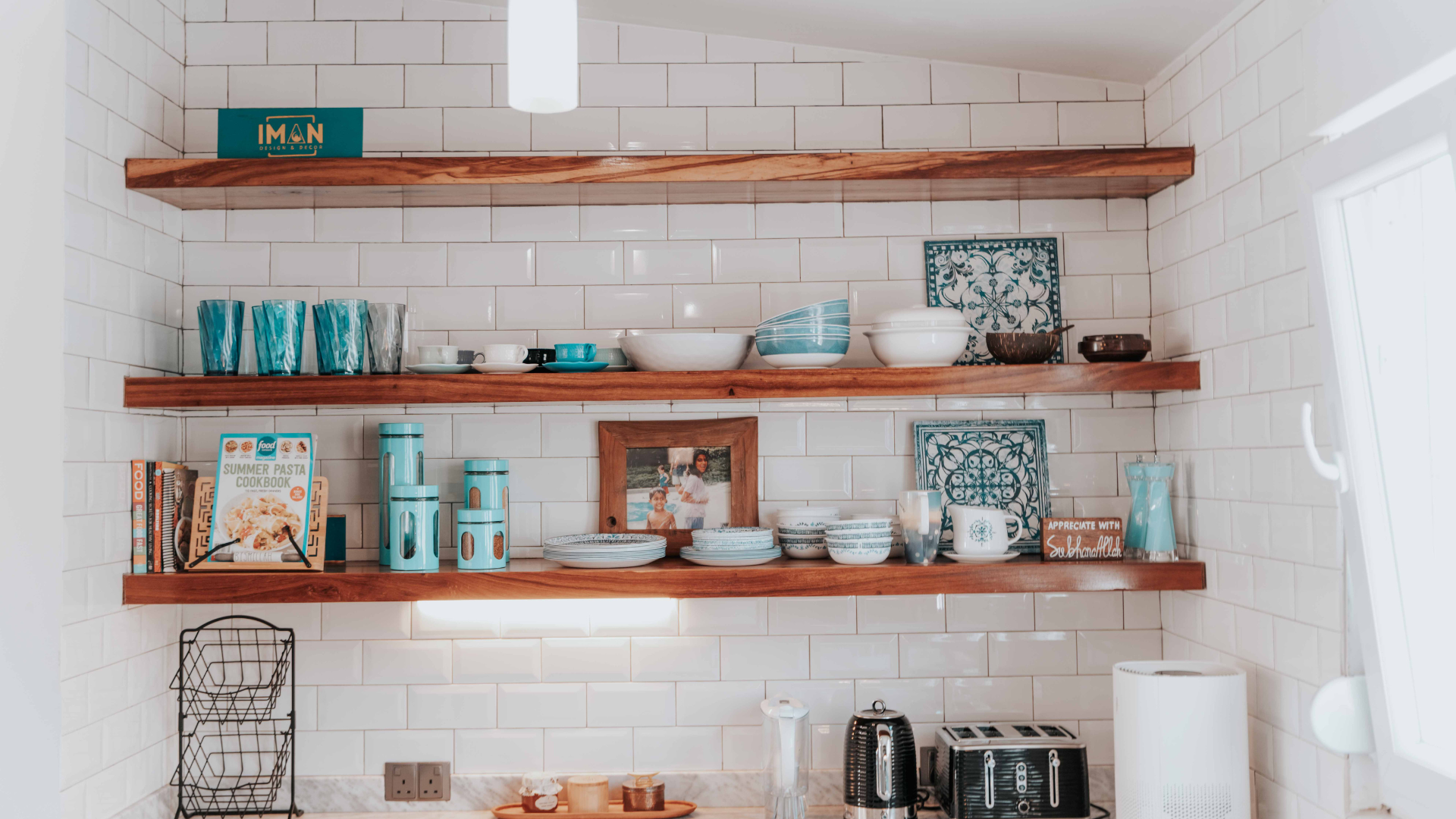
Incorporating everyday items like cookbooks or kitchen tools alongside decorative accents allows the shelves to be both appealing and useful.
Choosing The Right Shelving Unit
The choice of shelving unit greatly influences styling success. Shelves should complement the space while providing ample room for both display and storage.
Key Considerations:
- Material: Wood adds warmth, whereas metal introduces a modern touch.
- Size: Ensure the unit fits well in the intended area; it should not overwhelm the room.
- Shape: Open-back shelving creates an airy feel, while corner units maximize space.
Selecting the right shelves sets a strong foundation for creative and practical displays.
Assessing Items Before Display
Before placing items on open shelves, a thorough assessment ensures that only the most relevant pieces are showcased. Items should fit into the design while serving a purpose.
Evaluation Checklist:
- Relevance: Does the item fit the overall theme?
- Condition: Is it in good shape, free from damage?
- Frequency of Use: Will it be used regularly, or is it purely decorative?
This careful curation enhances the visual appeal and maintains order, preventing the space from feeling cluttered.
Arranging And Layering Objects With Style
Effective shelf styling requires attention to detail, especially when arranging and layering objects. This approach enhances the aesthetic appeal while minimizing clutter. Understanding how to mix textures, vary heights, and place everyday items strategically is crucial for achieving a sophisticated look.
Creating Visual Interest Using Texture
Incorporating various textures adds depth to a shelf. Mixing materials like wood, metal, glass, and ceramics creates contrast and draws the eye. For instance, pairing rustic wooden coffee mugs with sleek glass vases introduces an intriguing dynamic.
Textured items like woven baskets or tactile fabrics can soften hard surfaces. They help break monotony, allowing the viewer to explore each layer. A well-structured arrangement includes a combination of rough and smooth elements, maximizing visual appeal.
Varying Heights And Shapes
Height variation is essential in maintaining interest on open shelves. Grouping objects in differing sizes creates balance and flow. A tall plant placed next to short, round items can enhance visibility and highlight key pieces.
Layering shapes is equally important; simultaneously displaying geometric forms alongside organic outlines engages the viewer. It can be effective to use items like cylindrical vases beside angular sculptures. Strategic positioning ensures the eye moves fluidly across the shelf, contributing to a cohesive look.
Strategically Placing Everyday Items
Everyday items can be stylishly displayed to serve both form and function. Coffee mugs, for instance, can be arranged in an appealing way that showcases their colors and patterns. This practice not only decorates the shelf but also makes these items easily accessible.
Selecting aesthetically pleasing everyday objects maintains the shelf’s overall style. Placing a stack of books alongside a few decorative bowls can create a curated feel. Items that serve a purpose yet contribute to the aesthetic create a harmonious balance on open shelves.
Curating A Cohesive Aesthetic For Open Shelves
Creating an appealing look for open shelves requires attention to the elements that tie everything together. Choosing a unifying theme can transform shelves from cluttered spaces into focal points of the room.
Integrating Color And Backdrop Elements
The colors used on the shelf and the backdrop can significantly influence the visual cohesion of the space. For instance, a neutral backdrop can enhance the vibrancy of displayed items. Alternatively, a bold wall color can make lighter items pop.
Selecting a consistent color palette is crucial. Sticking to three or four key colors helps maintain a streamlined look. Incorporating textured items, such as ceramics or metals, adds depth without overwhelming the shelves.
Keep in mind the emotional impact of colors. For a serene space, consider soft blues and greens. For a more energetic feel, opt for brighter tones.
Incorporating Flowers And Nature
Adding flowers and plants can infuse life into open shelves. Fresh or dried arrangements create focal points and introduce organic shapes that contrast neatly with linear items.
Choose plants that complement the displayed objects. For example, trailing ivy works well with rustic ceramics, while succulents suit modern designs. Arranging these elements at varying heights keeps the eye engaged.
In addition to traditional vases, consider using unique containers. Items such as teacups or glass jars can serve dual purposes. They showcase natural elements while maintaining a cohesive aesthetic.
Leveraging Leftover Wallpaper
Using leftover wallpaper is a creative solution for enhancing open shelves. Applying it as a backing can introduce patterns and textures that serve as visual interest without added clutter.
Make sure the wallpaper echoes the overall color scheme and style of the room. Bold patterns might work in a more eclectic design, while soft, subtle designs suit minimalist spaces.
This approach allows homeowners to personalize their shelving without investing in new materials. It’s both budget-friendly and environmentally conscious, making it an appealing option for those curating their aesthetic.
By thoughtfully integrating these strategies, open shelves can transform into beautiful displays that reflect personal style while avoiding clutter.